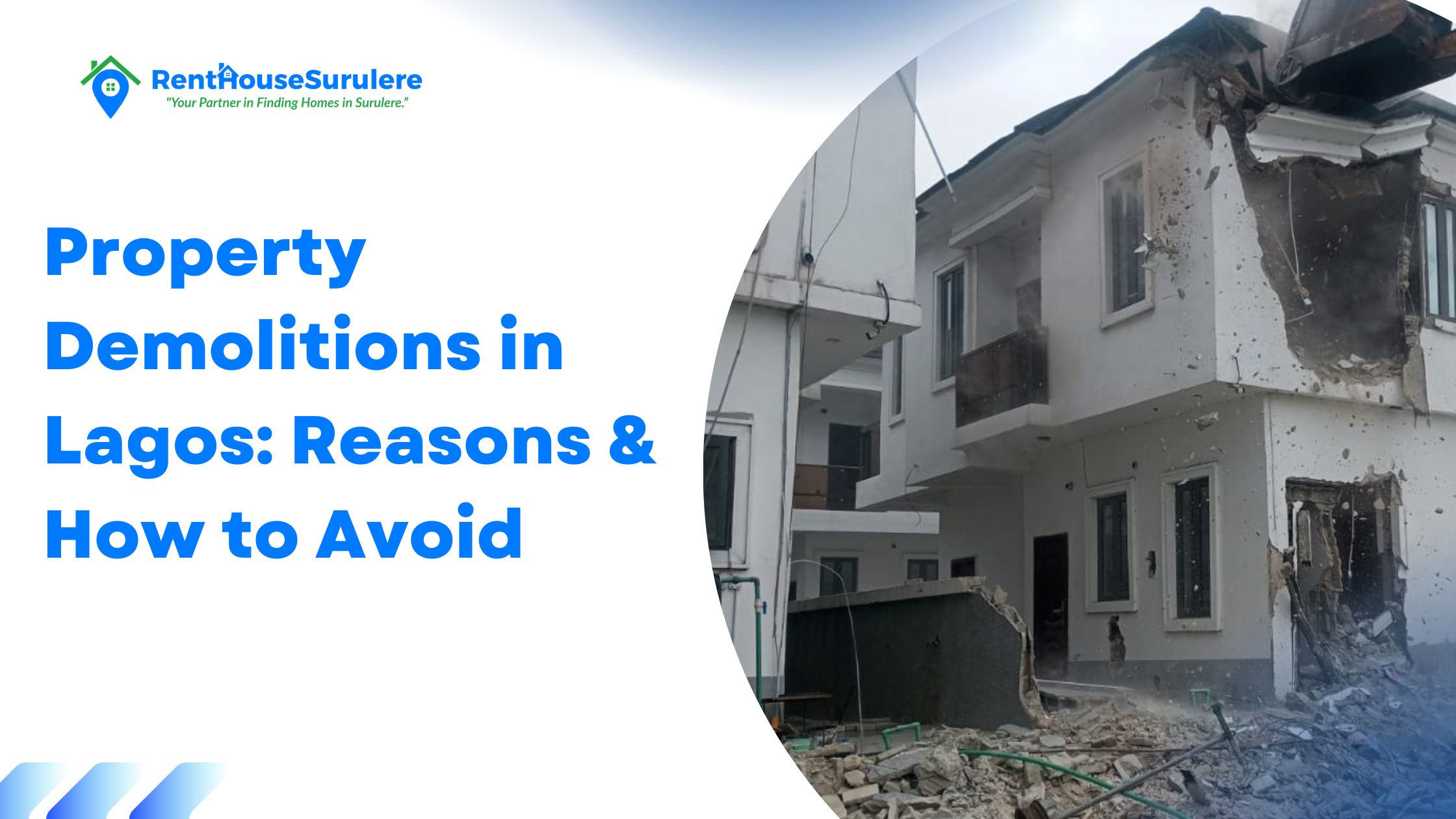
Lagos State has been at the centre of some of the most talked-about property demolitions in Nigeria this year.
The Trade Fair Complex in Ojo, for example, became a household name when bulldozers knocked down shops and commercial buildings in late 2025. Traders wept as their investments were reduced to rubble, and the news spread even into social media.
Around the same time, families in Oworonshoki protested that their houses were being taken down without sufficient notice. Why does this keep happening?
How do you protect yourself from losing your hard-earned home or investment?
That’s what this guide is all about.
TL;DR
- Most property demolitions are linked to lack of proper approvals, violation of zoning laws, or protected land like waterways.
- You can avoid this situation by verifying land titles and working with qualified legal/planning professionals and ignore shortcuts because ‘bad eggs’ in governments play a part in this matter, too.
- Never ignore government notices.
There’s currently no data to show how many properties have been demolished this year alone.
But from a mere news report count, the numbers have been rising steadily.
In Lagos, there are multiple agencies responsible for planning and enforcement.
For example:
- The Ministry of Physical Planning and Urban Development
- Lagos State Building Control Agency (LASBCA)
- The Urban Renewal Agency
They issue notices and, when necessary, remove structures that do not meet legal standards.
5 Reasons Properties Get Demolished in Lagos
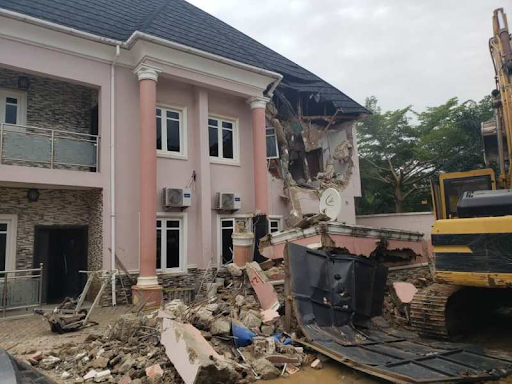
The reasons are grounded in urban planning laws and safety standards, but the real impact on residents is often much deeper.
1. Lack of Building Approvals and Permits
One of the most common causes of demolition is the absence of necessary building approvals.
Lagos State urban planning laws require that any new building or major alteration must be reviewed and approved by the appropriate authorities.
The state government usually justifies the actions on the basis that the structures are unapproved and unsafe.
Without official permits, even if a property was paid for and physically built, it can be deemed illegal and thus subject to removal.
2. Construction on Illegal or Unsafe Land
There is a big difference between buying land and buying legal land.
Some areas in Lagos have complex ownership titles or are classified as government-acquired or environmentally sensitive.
When people build on land without clear documentation that proves ownership and compliance with zoning regulations, the government has the authority to intervene.
In Lekki’s Ikota Estate, about 39 buildings were demolished because they encroached on river setbacks and drainage paths.
These areas are protected by environmental laws to prevent flooding.
So, buildings in those spaces were considered a danger to public safety and infrastructure.
3. Environmental Protection and Flood Control
Lagos is a coastal city surrounded by waterways and is prone to flooding.
To mitigate these risks, laws protect waterways, river banks, and drainage channels.
Buildings that block these natural systems create flooding hazards not only for building occupants but also for entire communities.
For example, the demolition of structures along the Ikota River was specifically linked to restoring natural water flow.
4. Public Safety Concerns
Sometimes demolition is ordered because a building is structurally unsafe or likely to collapse.
While collapse and demolition are not the same, unsafe buildings that pose a risk to life can be marked and removed to prevent disasters.
These actions are usually backed by engineering assessments and building inspections.
5. Violations of Zoning and Master Plans
This is, perhaps, the most common one. Lagos operates a master plan for urban development.
This plan divides the city into zones for residential, commercial, and industrial purposes. Buildings erected in violation of these zones or without regard to setback requirements can be targeted for demolition.
This happened in several market areas and housing estates where structures were found encroaching on roads, public spaces, or infrastructure Rights of Way (RoW).
How to Avoid Property Demolition in Lagos
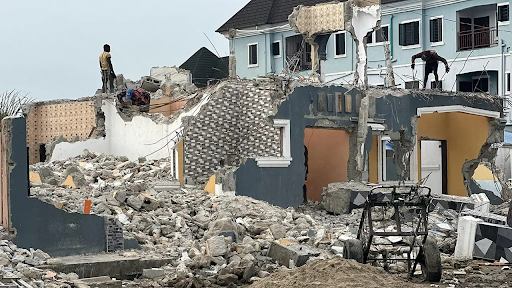
If your goal is to build with peace of mind or buy a property that will remain safe and legal for decades, here are the steps you must always take.
Verify Land Ownership and Title
The first and most important step before any transaction is to verify that the person selling the land actually owns it and has the right to sell it.
This means checking:
- Certificate of Occupancy (C of O)
- Governor’s Consent if the property is more than just a simple sale
- Survey plans
- Tax receipts
If any of these documents are missing or unclear, do not proceed until they are fully verified by professionals.
Ensure Building Approval Before Construction
Even after buying land, you should never build without obtaining formal approval from the Ministry of Physical Planning and Urban Development and other relevant authorities.
Show the plans to a qualified architect or town planner.
You also have to make sure that every aspect of the design meets zoning requirements, setback rules, safety standards, and even environmental laws.
Use Qualified Professionals
There’s really no way around it. Your lawyer should be well-versed in real estate transactions.
Your architect and builder should be registered and recognised by the relevant professional bodies. Doing things informally or cutting corners invites disaster. Governments and enforcement agencies enforce the law when it is broken.
And, even some government officials in these agencies are corrupt.
So, it becomes a problem when you try to patronize them.
Understand Zoning
Before you build or buy, find out what the Lagos master plan says about your area.
Is it residential? Commercial? Protected? Flood-prone?
Some lands are near waterways and may require additional approvals or environmental impact assessments.
Do Not Ignore Notices or Enforcement Warnings
If you receive a notice from a planning authority, address it immediately.
Ignoring it can lead to enforcement action without further warning. Authorities often issue notices with deadlines for compliance.
What Can I Do If I Get a Demolition Notice?
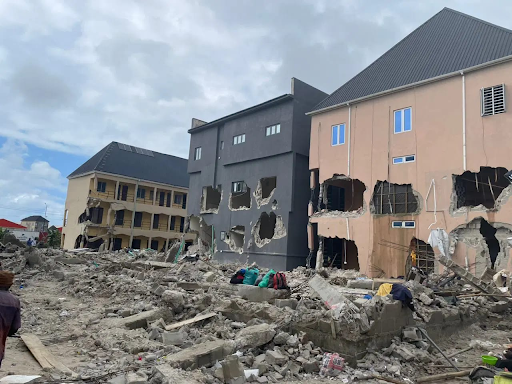
Even with the best preparation, demolition notices can still occur. If that happens to you:
- Seek Legal Advice Immediately
Engage a lawyer who specialises in real estate. There may be legal grounds to challenge the notice or negotiate terms.
- Check the Validity of the Notice
Sometimes notices are issued incorrectly or without proper authority. A legal expert will help clarify.
- Gather All Documentation
Bring every piece of paper you have that shows ownership, approval, survey plans, and receipts.
- Apply for Regularisation if Possible
In some cases, authorities allow buildings to be regularised if certain conditions are met. This can save the structure.
- Consider Mediation Before Enforcement
Some disputes can be resolved outside court. So think about saving time and expense. Not every property issue means “fight, fight, fight.”
What’s The Government Even Saying?

The Commissioner for the Environment and Water Resources, Tokunbo Wahab, who usually leads the monitoring team for these demolitions, mentioned to Premium Times around October 2025 that:
“Sometimes, we ask developers to produce practical designs for stormwater discharge, but they must bear the cost, not taxpayers.
“What we can do is mitigate its impact through resilient infrastructure, which Governor Babajide Sanwo-Olu has continued to provide and maintain.”
“The illegal activities ongoing in the area are heart-wrenching because some individuals have deliberately chosen to destroy the ecosystem provided by nature.”
He has even maintained that, “This administration will not fold its hands while nature’s design is distorted.
In a Nutshell…
The demolitions you read about in the news are often the result of long-standing violations of building regulations.
In almost every case, the root cause is:
- A lack of compliance with planning laws
- Unclear ownership
- Construction on land that was never properly approved.
To avoid becoming part of that story, you must take extra steps before you build or buy.